Model the clock stack
Edit lane cost, fuel exposure, tariff exposure, deadline days, documentation readiness, demand cover, and margin for each order family.
Weekly briefing simulator · 2026-W24
Cost-of-time operating calendar
Historical pattern
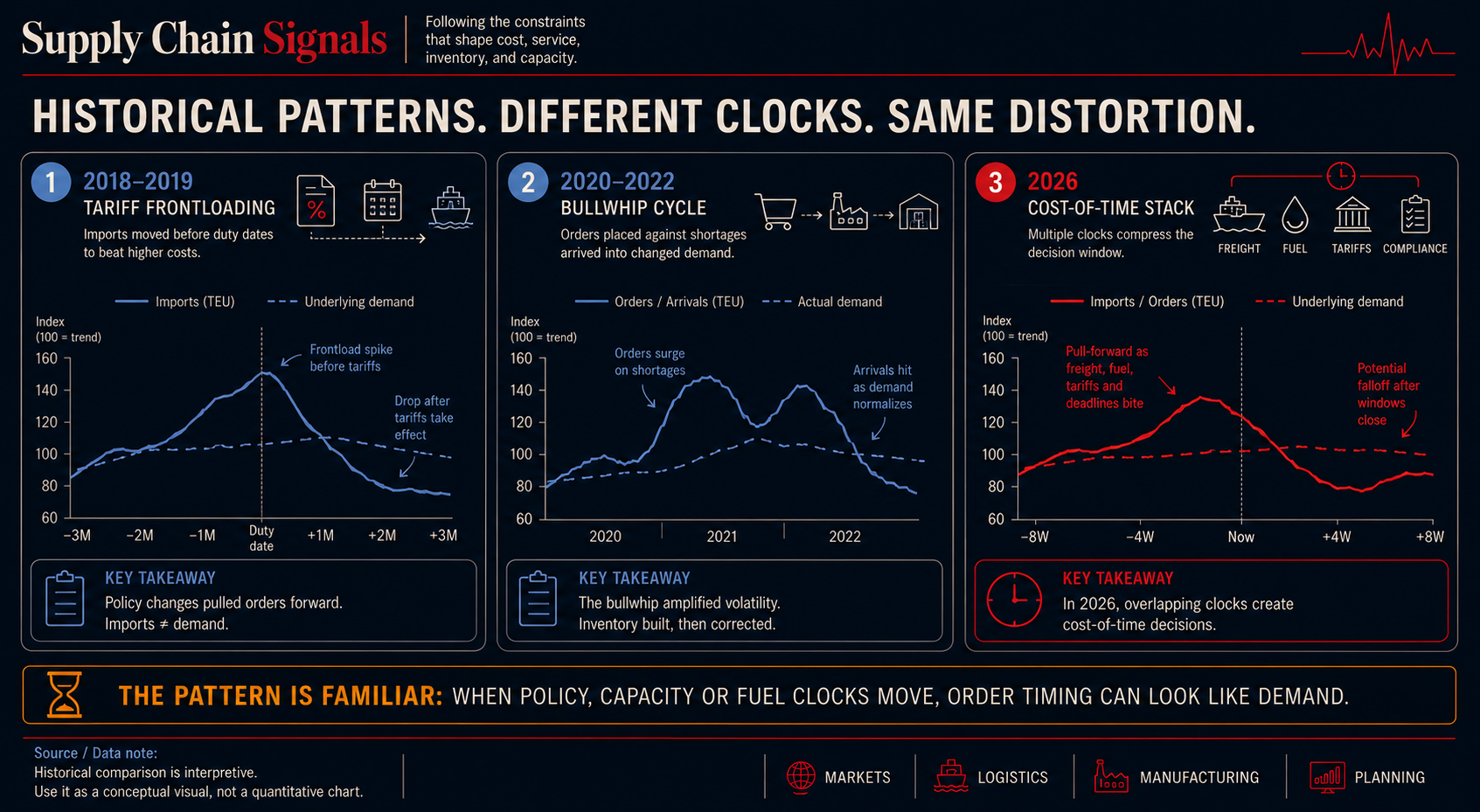
Tariff frontloading, bullwhip ordering, and today's cost-of-time stack all turn clock pressure into apparent demand.
Start here
W24's signal was blunt: freight, fuel, tariff, compliance, demand, and finance clocks are colliding inside the purchase order. This simulator helps an operator decide whether to pay now, wait, split, re-source, or hold.
Scenario lens
Choose a policy mode, then edit the order board. Results update live.
Editable operating calendar
Decision logic
Each row scores the cost of waiting, the cost of moving early, and the cost of being wrong. A high score does not always mean ship now; it means the order needs an explicit clock owner and a threshold-triggered action.
Operator guide
Use one category, lane, supplier program, or PO wave at a time. The goal is not to forecast the exact future. The goal is to decide which timing risk gets paid for, delayed, split, or stopped.
Replace sample rows with SKU families or open POs. Use value at landed cost so margin and cash effects are visible.
Rate freight/fuel, tariff, compliance, demand, and supplier pressure from 0 to 100. Higher means the clock matters more.
Use days until a tariff, surcharge, booking cutoff, delivery promise, or supplier documentation deadline. Short windows raise late-decision risk.
Low margin makes a paid timing premium harder to absorb. High service criticality can still justify it.
The row shows baseline risk into scenario risk. A large positive delta means the selected future makes that PO more fragile.
Actions are meeting prompts: book now, split, wait with trigger, hold for documents, re-source, reprice, or stop the buy.